
The Multimodal Ideation Sprint in Practice: Two Hours, Five Phases, One Campaign
Tomás had two weeks, no budget, and a subject nobody wanted to hear about again. His nonprofit’s water-conservation campaign for Mexico City’s dry season had to cut through years of well-meaning posters — the faucet, the drop, the earnest injunction — and reach households that had long ago learned to look past all three. The traditional method for this situation is a panicked all-nighter. Chapter 10 of the book offers a structured alternative: the Multimodal Ideation Sprint — two hours, five timed phases, run as a conversation with AI across different media rather than a single desperate prompt.
He blocked the two hours on a Tuesday, canvas from the Prompt-Scaffolding exercise at his elbow, and kept the timer honest.
Seed — 20 minutes
Quantity over quality: eighteen concepts, each a line or two, with quick notes on where it came from — the book’s discipline of documenting creative lineage from the first minute. His seeds included his grandmother’s rain barrels in Oaxaca and the way she spoke of water as a guest to be received; the visual grammar of lucha libre posters; metro signage’s gift for saying things in four words; the sound of a cistern truck’s bell; a neighbor who narrates her plants’ moods on WhatsApp.
Generate — 30 minutes
He picked four seeds and pushed each across media — text to image, voice to text, script to storyboard. The rain-barrel memory became a sixty-second radio spot draft; the lucha libre grammar became poster mockups; the WhatsApp neighbor became a voice-note serial, three episodes, forty seconds each. “The point of crossing media,” he says, “is that each one interrogates the idea differently. The poster asks: can you see it? The voice note asks: does it sound like a person?”
Remix — 30 minutes
The sprint’s turn: combine elements from different variations and see what the collision produces. The grandmother and the wrestler collided — and La Defensora del Agua was born: a masked abuela of formidable dignity who defends every drop, poster-styled like a championship bout (La Defensora vs. El Desperdicio), voiced in the radio spot with the warmth of a woman who has been receiving water as a guest for seventy years. Neither seed contained her. The merge did.
Stress-test — 15 minutes
Practical filters first: does the poster read at metro speed? Does the voice note survive a WhatsApp forward to a cracked speaker? Then the ethical filters the phase exists for: does La Defensora honor lucha culture or costume-shop it — a question he took to two lucha-aficionado colleagues rather than answering himself; does the campaign credit the poster tradition’s living artists (the eventual muralist got the full reference sheet, along with the commission); and does any of it shame residents for scarcity they didn’t cause? One tagline died in this phase for exactly that reason, and deserved to.
Polish — 15 minutes
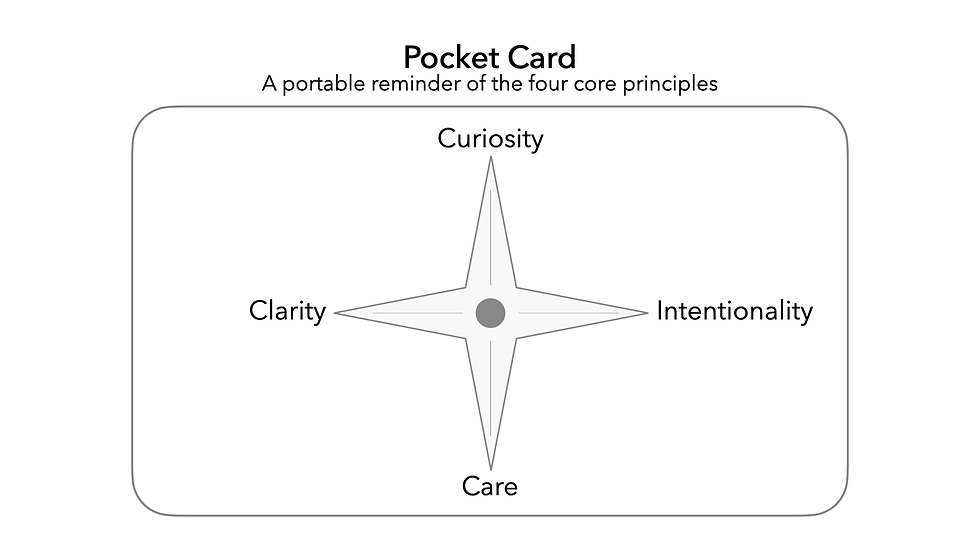
One direction, refined against all four of the book’s postures — curiosity, intentionality, clarity, care — which by this point functioned as a checklist the work had already mostly passed, because the sprint had built them in phase by phase.
The campaign shipped in twelve days: posters, radio, and the voice-note serial, which neighbors began forwarding on their own because a forty-second abuela is exactly the size of thing neighbors forward. Tomás’s summary of the method has become the way his whole team briefs it: the sprint didn’t make the machine creative. It made two hours honest — every phase timed, every influence named, every shortcut inspected — which turned out to be what the all-nighter never was.
Tomás is a composite — drawn from conversations with nonprofit and campaign creatives working under deadline with AI tools, with details changed. La Defensora, regrettably, is not yet real.
Try it yourself
Block two honest hours. Seed for twenty minutes (10–20 ideas, influences noted), generate for thirty (3–5 seeds pushed across different media), remix for thirty (merge opposing directions), stress-test for fifteen (practical and ethical filters — will it work, does it respect its sources), polish for fifteen. Each phase is a conversation with the AI, not a single exchange — and the timer is what keeps exploration from becoming avoidance.
Comments